

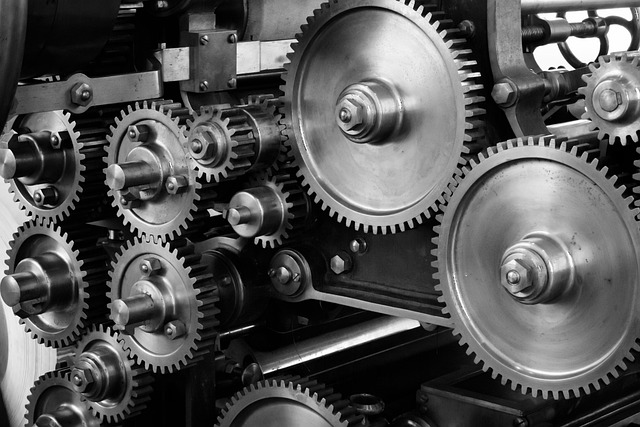
The reference until 20/01/2027 for all manufacturers of “machinery” destined for the EU.
The Machinery Directive 2006/42/EC is the current legislative reference for all manufacturers who intend to market or install industrial machinery in the European Union. It will remain in force until 20/01/2027, when it will be replaced by the new Regulation (EU) 2023/1230 on machinery.
The machinery directive asserts that it applies specifically to ‘machinery’, a term that is somewhat too generic and could indeed lead to various interpretations. Therefore, it is essential to examine the meaning of ‘machinery’, which is defined by the directive as:
- an assembly, fitted with or intended to be fitted with a drive system other than directly applied human or animal effort, consisting of linked parts or components, at least one of which moves, and which are joined together for a specific application,
- an assembly referred to in the first indent, missing only the components to connect it on site or to sources of energy and motion,
- an assembly referred to in the first and second indents, ready to be installed and able to function as it stands only if mounted on a means of transport, or installed in a building or a structure,
- assemblies of machinery referred to in the first, second and third indents or partly completed machinery referred to in point (g) which, in order to achieve the same end, are arranged and controlled so that they function as an integral whole,
- an assembly of linked parts or components, at least one of which moves and which are joined together, intended for lifting loads and whose only power source is directly applied human effort;
The key distinguishing factor is the presence of at least one moving part, powered by a force other than a direct human or animal force – such as external energy sources like electricity, pneumatics, or hydraulics. Stored forces, such as a spring, also fall within this definition. Additionally, the assembly must perform a clearly defined function. An incomplete piece of equipment that is unable to perform its intended function does not meet the definition of machinery. However, the absence of connections or drive systems does not affect its classification – it may still fall within the definition of machinery.
Machinery is defined as “an assembly…consisting of linked parts or components…which are joined together”. The fact that a machine is disassembled for shipment and later reassembled at its destination does not affect its classification. The definition also includes assemblies of machinery, such as production lines or industrial plants, which, as a whole, are considered machinery for all intents and purposes.
All those who manufacture “machinery” are obliged to comply with the provisions of Directive 2006/42/EC until 20/01/2027, and subsequently those of the new Regulation (EU) 2023/1230 on machinery.